Transfer from Pediatric to Adult Programs and Services
For young adults, moving from a pediatrician to a doctor who treats adults is an important step. This transition can be intimidating, because it usually means leaving a doctor they've known and trusted for years. It is important to start seeing a doctor who treats adults because that doctor is better equipped to manage and treat health concerns of adulthood. Coordinating communication between the pediatric and adult doctors can make the change seem less overwhelming.
To make the transition smoother, ask your pediatrician and new doctor to share information about your health history. It also helps to start practicing skills that will make you more independent. This may include asking your own questions during appointments, learning about your health and medications, keeping track of instructions, and making your own appointments. If you want, you can bring a trusted adult with you to visits as you get used to these changes.
Rhode Island Medicaid reimburses pediatricians for healthcare transition planning to help youth move from a pediatric to an adult primary care setting. The pediatrician will:
- Complete a transition readiness assessment with youth;
- Provide education and counseling to address transition-related skills needs and goal setting;
- Prepare a medical summary to give to the new doctor; and
- Join telehealth visits with the youth and the new adult primary care provider.
Preparing in this way can help you feel more confident about managing your health as you move into adulthood. You’ll also find resources on wellness, health insurance choices, and telehealth to help you and your family during this time.
Wellness is focused on prevention and healthy habits. It is about how you live your life and the joy, fulfillment, and health you experience. When you add wellness to your medical and behavioral healthcare, it helps you be as health as possible.
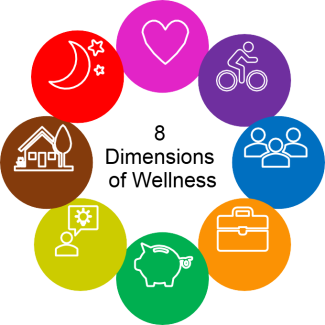
There are 8 different areas of wellness that affect your life.
Emotional well-being
- Celebrate your successes and accept your challenges.
- Find a counselor or therapist for ongoing mental health issues.
- Follow your routines as much as possible.
- Talk to someone you trust.
Physical well-being
- Schedule and go to all of your regular medical appointments.
- Exercise and be physically active.
- Eat healthy foods.
- Wash your hands, brush your teeth, and take a bath or shower every day.
Social well-being
- Join activities in your community.
- Develop meaningful relationships.
- Build a group of friends who support you and who you enjoy spending time with.
- Volunteer at an animal shelter, school, nursing home, or community organization.
Occupational well-being
- Learn a trade like plumbing, electrical, auto repair, or hair dressing.
- Take classes or enroll at a trade school, college, or university.
Financial well-being
- Learn how to budget and manage your money.
- Understand and manage your health insurance benefits.
- Try to keep a consistent source of income.
Environmental well-being
- Make sure you have safe, affordable, and stable housing.
- Keep your living space clean and neat.
- Find a place that you like to visit that makes you happy—the beach or a park.
Spiritual well-being
- Decide what your values and beliefs are.
- Treat yourself and others with kindness.
Intellectual well-being
- Try to learn something new every day.
- Find a hobby that interests you.
- Try to go to public events in your community.
Everyone’s definition of wellness is different because everyone likes different things. The federal Substance Abuse and Mental Health Services Administration (SAMSHA) has a guide to help you learn about wellness. It includes information about things you can do at your own pace and that match your abilities.
You can learn more about some different wellness topics by clicking on one of these links:
Health insurance helps pay for healthcare services like office visits, annual check-ups, blood work, x-rays, surgeries, or hospitalizations. It may also cover services to keep you health or to help you manage long-term, chronic medical or behavioral health conditions.
Private Insurance
Health insurance from where you work
If you work at least 30 hours a week for a company with 50 or more employees, you are eligible to get health insurance from your employer. Many young adults stay on their parents’ health insurance until they turn 26. Check with your parents to see if you can stay on their health insurance plan.
Consolidated Omnibus Budget Reconciliation Act (COBRA)
COBRA is short-term coverage for employees who have reduced hours or have ended their job.
College or University Student Health Plans
Students enrolled in a college, university, or trade school may be able to purchase health insurance through their school.
Marketplace (Affordable Care Act/Obamacare) Individual and Family Plans
If you do not get health insurance through your parents, your job, or your school, and are not eligible for Medicaid, you may be eligible to buy health insurance through HealthSource RI. You can choose from different health insurance plans. All plans that are available at HealthSource RI provide essential health benefits, including coverage for mental health counseling, doctor visits, hospitalizations, maternity care, emergency room visits, and prescriptions. HealthSource RI can also help you apply for Medicaid.
Public insurance
Rhode Island Medicaid
Medicaid is Rhode Island’s public health insurance program. It helps eligible Rhode Islanders get healthcare coverage at little or no cost. Whether you qualify depends on things like your income, age, household size, disability status, and immigration status.
If you have a disability, you may qualify for Medicaid even if your income is too high for other Medicaid programs. Rhode Island offers eligibility pathways for adults with disabilities, including programs that allow some individuals who are working to keep Medicaid coverage while earning income—as long as they meet program requirements.
Medicare
Most people think that Medicare is only for older adults, but some young adults with disabilities or certain health conditions can qualify too. If you qualify for both Medicare and Medicaid, the two programs can work together to help cover your healthcare services and lower how much you have to pay.
Tricare
Tricare is health insurance that is available to veterans and their dependents and active-duty service members and their families. Honorably discharged veterans may get health insurance through the federal Veterans’ Administration.
Other insurance options
If you are not eligible for health insurance or cannot afford to buy your own insurance, learn about these special programs in the community:
- Free or income-based clinics
- RI Free Clinic
- Clinica Esperanza
- Progreso Latino
- Dorcas International Institute
What behavioral health services are covered by health insurance?
Most health insurance plans help cover mental health and substance use services. These may be provided in-person or virtually (telehealth) and can include:
- Services provided by psychiatrists, psychologists, social workers, registered nurses, and counselors;
- Treatments like psychotherapy, counseling, medication, and substance-use treatment; and
- Hospital or emergency room visits; preventive services like screenings for alcohol use or depression.
What costs do you still have to pay when you have insurance?
What you have to pay for and how much you have to pay depends on your insurance plan. Here are some terms you may hear:
- Deductible: the amount of money you must pay yourself before an insurance company starts helping you pay.
- Co-payment: a fixed amount you pay for a healthcare service that is covered after you pay your deductible.
- Co-insurance: the amount of the total bill you have to pay for yourself; Medicaid does not have co-insurance.
- Premium expenses: the amount you pay your insurance company for your insurance plan; Premiums are usually paid each month.
- In-Network and Out-of-Network Providers: Your insurance company decides if a provider is in-network or out-of-network. Always check if your provider is in-network or out-of-network because an in-network provider is usually less expensive. To check if your provider is in-network or out-of-network, call the phone number for customer service that is printed on the back of your insurance card.
Telehealth is when you get counseling and other services by live video, phone, or other technology. Since the COVID-19 pandemic, more providers offer telehealth visits, and more health insurance plans cover this option. The same confidentiality laws that you have for in-person visits also apply for telehealth visits. Ask your provider if they offer telehealth visits. Counseling via texting from your phone is not covered by health insurance.
If you are interested in telehealth visits, ask your provider what you need to have or what you need to do to have a telehealth appointment. You might also want to ask what happens if you don’t like telehealth visits.
Benefits of telehealth visits
- Services are provided in a safe and private place that you choose.
- Services can include therapy (individual, group, or family), medication management, or evaluations.
- You do not have to worry about how you will get to your appointment.
- It’s usually flexible and easier to schedule.
Prepare for your telehealth appointment
- Make sure your provider or provider agency is licensed in Rhode Island. If you are in Rhode Island when you have your telehealth appointment, it is the law that the provider must be licensed by the Rhode Island Department of Health.
- Make sure you have the right device and the right software, and make sure the app is installed and your internet connection is working.
- Log in about 10 minutes before your appointment is scheduled to start so you can test your device and internet connection.
- Write down any questions you want to ask your provider.
During your telehealth appointment
- Make sure your space is safe and private.
- Have a safe word to tell your provider if your location becomes unsafe or not secure during your appointment.
- Give all of your attention to your provider. Do not check your phone, texts, or other social media during the telehealth visit.
Things to know about telehealth appointments
- You might have to pay a co-pay for a telehealth appointment.
- You need to have the right technology.
- You need to have a reliable connection to the internet.
- You may not have a private or safe place to have a telehealth visit.
- You might decide you do not like telehealth visits after you try it. That’s okay.
National Federation of Families COVID-19 Resources for Parents, Families, and Youth Tips for preparing for a telehealth appointment: English or Spanish
Learn more about telehealth and Resources for Free Laptops
Information and Support For Parents and Young Adults
How Healthcare Transition Works for Teens: guide for teens in Rhode Island with special needs to help them transition from pediatric to adult healthcare
How Healthcare Transition Works for Parents and Caregivers: a guide for Rhode Island parents and caregivers of young adults with special needs to help with the transition from pediatric to adult healthcare.
Got Transition website has a 6-step approach to help individuals learn independent self-healthcare skills, prepare for an adult model of care, and transfer to new providers. Provided by the Maternal and Child Health Bureau and The National Alliance to Advance Adolescent Health.
Ready Checklist: First in a series to help young people think about planning for their future (fillable format); Provided by Rhode Island Department of Health (RIDOH) and adapted from Bloorview Kids Rehab, Toronto, CA. Ready Spanish
Get Set Checklist: Second in a series to help young people think about planning for their future (fillable format); Provided by RIDOH and adapted from Bloorview Kids Rehab, Toronto, CA. Get Set Spanish
Go Checklist: Third in a series of checklists to help young people think about planning for their future (fillable format); Provided by RIDOH and adapted from Bloorview Kids Rehab, Toronto, CA. Go Spanish
Social Security Administration pays benefits to disabled adults and children who have limited income and resources. Learn about different Social Security programs and how to apply.
Right to Know app: web app that gives adolescents and young adults private, medically correct, honest, and stigma-free information about sexual and reproductive health